New Age Products Alternatives: A Buyer's Guide
Table of Contents
- Why Homeowners Look Beyond New Age Products
- NewAge vs. Gladiator Cabinets: Core Differences
- Top Garage Storage Cabinet Brands to Consider
- Garage Cabinet Buying Guide: What Actually Matters
- Modular Outdoor Kitchens: Beyond New Age Products
- Common Mistakes When Comparing Cabinet Systems
- Which Alternative Fits Your Needs
- Frequently Asked Questions
Last Updated: October 4, 2026
Why Homeowners Look Beyond New Age Products
When you're shopping for garage storage solutions, New Age Products alternatives often come up because homeowners want options. The reality is that one brand doesn't fit every situation. Budget constraints, space limitations, aesthetic preferences, and long-term durability expectations all push people to explore what else is available.
This guide walks you through the key alternatives, what separates them, and how to pick the right system for your actual space and needs.
NewAge vs. Gladiator Cabinets: Core Differences
NewAge and Gladiator represent two different philosophies in garage storage. Understanding the contrast helps clarify what matters most to you.
NewAge focuses on modular customization. You build configurations from individual pieces, which gives flexibility but requires more planning upfront. The systems emphasize aesthetic appeal and come in multiple colors and finishes.
Gladiator prioritizes heavy-duty construction and industrial durability. Their cabinets are built thicker, designed for serious workshop use and frequent access. The trade-off is less customization and a more utilitarian appearance.
The material quality difference is real. Gladiator uses heavier gauge steel and reinforced hinges. NewAge systems are lighter, which makes them easier to move during installation but means they handle less aggressive use differently.
For homeowners hosting family gatherings and needing an organized garage that looks intentional, NewAge works well. For someone running a workshop or needing industrial-grade capacity, Gladiator delivers. Most homeowners fall somewhere in between, which is why alternatives matter.
Top Garage Storage Cabinet Brands to Consider
Beyond NewAge and Gladiator, several cabinet series and brands deserve detailed attention. Each brings different strengths, and understanding the specifics, not just marketing claims, helps you make a grounded choice.
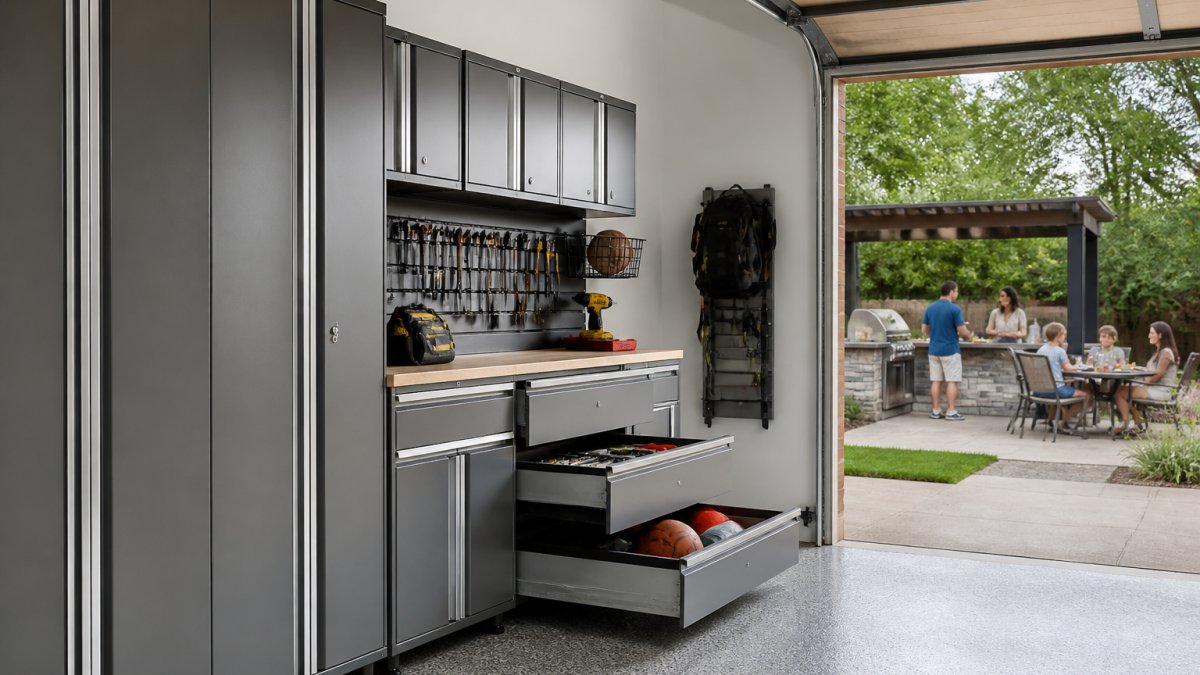
Husky cabinets, sold through major retailers, offer solid mid-range construction. A typical Husky base cabinet (36 inches wide, 24 inches deep, 34 inches tall) costs $250-$400 and supports approximately 600 pounds per adjustable shelf. The steel gauge is 18-20, comparable to NewAge. Assembly typically requires 3-5 hours for a single unit.
Kobalt systems from Lowe's emphasize modular design similar to NewAge but with different engineering. A Kobalt 48-inch wide base cabinet runs $300-$500 and uses 18-gauge steel with reinforced drawer slides rated for 100-pound drawers.
Craftsman garage storage emphasizes heavy-duty construction without the industrial aesthetic of Gladiator. Their cabinet sets typically include a 48-inch base unit paired with a 48-inch wall cabinet, sold as a bundle for $600-$900. The steel is 18-gauge, and shelf capacity is rated at 750 pounds per shelf. Hinges are full-overlay, meaning they're more visible but also more durable than hidden hinges.
Rubbermaid focuses on garage flooring and overhead storage alongside cabinet systems. Their base cabinets (36 inches wide, 18 inches deep) cost $150-$300 and are lighter-duty than Husky or Kobalt, supporting about 400 pounds per shelf. The advantage is that Rubbermaid offers an integrated ecosystem: if you buy their flooring, wall-mounted shelving, and base cabinets together, the design language is cohesive.
Gladiator (mentioned earlier) deserves specification detail here as well. Their base cabinets (48 inches wide, 18 inches deep, 34 inches tall) cost $800-$1,200 per unit and support 1,000+ pounds per shelf due to 16-gauge steel and heavy-duty reinforced hinges. Assembly requires 4-6 hours per unit and often benefits from a second person because of the weight.
NewAge (mentioned earlier) offers the most customization. A 24-inch wide base cabinet costs $200-$350; a 48-inch wide unit runs $400-$600. Steel is 18-gauge. Shelf capacity is 500-700 pounds depending on configuration. Assembly is 4-8 hours per unit because of the modular connection system. Warranty is 1 year.
Specifications Comparison at a Glance
When evaluating these brands, compare them on the metrics that actually matter:
- Steel gauge: Lower numbers (16, 18) are thicker and stronger. Most quality systems use 18-20 gauge. Budget systems sometimes use 20-24 gauge.
- Shelf capacity: Ranges from 400 pounds (Rubbermaid) to 1,000+ pounds (Gladiator). Match this to what you'll actually store. A full set of hand tools and power tools typically weighs 200-400 pounds; heavy machinery or bulk items require higher capacity.
- Assembly time: Budget 2-4 hours for simple systems, 6-12 hours for modular systems, and 8-16 hours for complete multi-unit setups. Add time if you're working alone.
- Warranty: 1 year is standard; 2-3 years indicates manufacturer confidence. Check whether the warranty covers rust-through, which matters in humid climates.
- Hinge type: Full-overlay hinges are more visible but more durable. Concealed hinges look cleaner but are slightly less robust. Both are adequate for residential use.
- Availability of replacement parts: Gladiator, NewAge, and Craftsman have established parts ecosystems. Rubbermaid and Kobalt parts are available but sometimes harder to source. Husky parts vary by retailer.
The right brand depends on your priorities. If budget is tight and you need basic organization, Husky or Rubbermaid work. If you want customization without premium pricing, Kobalt or NewAge fit. If you need industrial durability, Gladiator justifies the cost. Craftsman splits the difference: solid construction, reasonable price, good warranty.
Garage Cabinet Buying Guide: What Actually Matters
Choosing between cabinet systems requires thinking past the product itself. Three decisions drive everything else: your space, your assembly comfort, and what you actually need to store.
Measuring Your Space and Choosing Configurations
Start with honest measurements. Grab a tape measure and check:
- Wall length (in inches, accounting for windows, doors, outlets)
- Wall height (floor to ceiling, noting any obstructions)
- Door swing space (make sure cabinet doors open fully)
- Electrical outlet locations (you might need to plan around them)
Most homeowners underestimate how much space a 98-inch cabinet takes. That's 8 feet of linear wall space. In a 12x14 foot patio, that's significant.
Configuration options matter. Base cabinets alone work for tool storage. Adding wall cabinets above multiplies capacity. Tall cabinets (reaching ceiling) maximize vertical space but require assembly at height.
A common mistake is buying more cabinet than you need. Start with what you actually store. Measure your current storage pile. Overbuying wastes money and crowds your space.
Assembly, Installation, and Support
This is where reality diverges from marketing. Assembly difficulty varies wildly.
Budget systems often require 4-8 hours for a basic setup. You'll need a helper, basic tools, and patience. Mid-range systems like NewAge and Gladiator typically require 6-12 hours.
The question most homeowners ask: "Do I need to hire someone?" The honest answer is that it depends on your comfort level and available time. If you've assembled IKEA furniture without issues, you can probably handle most garage cabinets. If assembly frustrates you, hiring help is worth the cost.
Installation support matters. Some brands offer phone support during assembly. Others provide only PDF manuals.
Damage during shipping happens occasionally. Check your cabinets immediately upon delivery. Most brands offer 30-day returns if something arrives damaged. Delightful Backyard provides free shipping on most orders within the continental U.S. and 30-day returns, which protects you if the setup doesn't work with your space.
Modular Outdoor Kitchens: Beyond New Age Products
Garage storage and outdoor kitchens serve different purposes, but the comparison is useful because both involve modular systems and durability questions.
An outdoor kitchen is permanent entertainment infrastructure. You're not rearranging it seasonally. That means material quality and weather resistance matter more than flexibility.
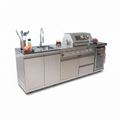
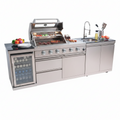
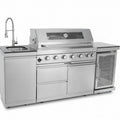
Modular outdoor kitchen alternatives include built-in concrete installations, custom cabinetry, and prefabricated systems. Built-in options are expensive and permanent. Custom work takes months. Modular systems like ours offer quality construction that installs quickly.
The 72,000 BTU 4-burner grill in our modular design handles serious cooking. The 98-inch configuration fits most patios without dominating the space. Durable construction means it holds up season after season.
What separates a quality modular outdoor kitchen from a budget alternative is the same as with garage cabinets: steel gauge, hinge quality, finish thickness, and support infrastructure. We've built ours to withstand weather and frequent use.
Common Mistakes When Comparing Cabinet Systems
Most people make the same errors when evaluating options. Recognizing them saves money and frustration.
Mistake 1: Ignoring assembly reality. Marketing photos show finished cabinets. Reality involves 8-12 hours of assembly. Budget time and help accordingly.
Mistake 2: Underestimating space needs. People buy less than they actually need to store, then regret it within a year. Measure what you own, not what you hope to own.
Mistake 3: Focusing only on price. The cheapest option rarely delivers the best value over time. A system lasting 10 years beats one lasting 4 years, even if it costs more upfront.
Mistake 4: Overlooking warranty and support. When something fails, you want parts available and help accessible. Established brands deliver this; unknown brands often don't.
Mistake 5: Not planning for your actual use. A homeowner hosting weekly family gatherings needs different durability than someone using the space occasionally. Match the system to your real lifestyle.
Mistake 6: Assuming one brand fits all needs. NewAge works well for customization. Gladiator excels at heavy-duty use. Husky offers value. No single system is universally best.
Which Alternative Fits Your Needs
The right choice among New Age Products alternatives depends on four factors: your budget, your space, your assembly comfort, and your timeline.
Budget-conscious homeowners should consider Husky or Kobalt. Both offer solid construction at accessible prices. Assembly is straightforward. You sacrifice some customization and premium finishes, but the core functionality is there.
Customization priority points toward NewAge. You build exactly what you want. The trade-off is more complex assembly and slightly lighter construction.
Heavy-duty users should choose Gladiator. The industrial durability justifies the higher cost. Assembly is more involved, but the cabinets handle aggressive use.
Homeowners wanting an all-in-one solution for outdoor entertaining should explore modular outdoor kitchens. If your goal is creating a gathering space, not just organizing tools, a complete outdoor kitchen delivers functionality and style simultaneously. Delightful Backyard's modular design offers this integration with durable construction and quick setup.
Timeline matters. If you need storage operational within a week, budget systems and straightforward assembly are essential. If you have time, premium options are viable.
Choosing between garage storage alternatives requires balancing features, durability, price, and your actual needs. NewAge Products alternatives range from budget-friendly to premium, each with legitimate strengths. The mistake most homeowners make is treating this as a simple price comparison. It's not. A system that fits your space, matches your assembly comfort, and aligns with your long-term expectations delivers value that lasts years. Take time to measure your space honestly, understand what you'll actually store, and choose accordingly. If your goal extends beyond storage to creating a complete outdoor entertaining space, modular solutions like those from Delightful Backyard address both organization and lifestyle in one investment.
Frequently Asked Questions
What are the key differences between Gladiator and NewAge cabinets?
Gladiator cabinets emphasize heavy-duty steel construction and industrial aesthetics, designed primarily for serious workshop use. NewAge products focus on residential garage storage with a broader range of finishes and modular configurations. Gladiator systems typically cost more upfront but appeal to users prioritizing maximum durability and weight capacity. NewAge offers more style options and flexible layouts for homeowners who want their garage to match their home's aesthetic. Both use steel construction, but Gladiator's thicker gauge steel and reinforced frames handle higher loads, while NewAge balances durability with affordability and design variety.
Are NewAge Products garage cabinets good quality?
NewAge cabinets offer solid mid-range quality with steel construction, adjustable shelves, and reasonable durability for typical home garage use. They resist rust better than budget alternatives and hold up well in moderate climates. However, they don't match the industrial-grade durability of premium brands like Gladiator, and some owners report issues with drawer alignment or finish wear after several years of heavy use. Quality depends on the specific series, their Pro and Bold lines perform better than entry-level options. For casual storage and light workshop use, NewAge delivers good value; for heavy-duty commercial or professional shop environments, heavier-duty alternatives may be worth the investment.
What should I compare when choosing garage storage cabinets?
Prioritize these factors: steel gauge thickness (thicker = stronger), weight capacity per shelf and drawer, finish quality (powder-coated steel resists rust better), warranty length and coverage, assembly complexity, and whether replacement parts are readily available. Measure your space carefully, modular systems vary in width, depth, and height, and custom configurations may cost extra. Check customer reviews for real-world durability in your climate. Compare total cost including delivery and any assembly fees, not just the base price. Finally, confirm the brand offers responsive customer support if parts arrive damaged or don't fit as expected.
Which garage cabinet brands offer solid alternatives to NewAge?
Gladiator (heavy-duty steel, premium price), Husky (budget-friendly, basic durability), and Kobalt (mid-range quality, good warranty) represent the main alternatives. Each excels in different areas: Gladiator for maximum durability, Husky for affordability, Kobalt for balanced features. Your choice depends on your budget, climate, intended use, and whether you want a garage-only or full outdoor living system.