Stainless Steel Outdoor Cabinets: Worth It for Coastal Homes?
Table of Contents
- Why Stainless Steel Dominates Coastal Outdoor Kitchens
- 304 vs. 316 Stainless Steel: Which Grade Handles Salt Air
- Aluminum vs. Stainless Steel Outdoor Kitchen Cabinets
- Stainless Steel Outdoor Cabinets Pros and Cons
- How to Prevent Rust on Outdoor Stainless Steel
- Best Material for Outdoor Kitchen Cabinets: Cost vs. Lifespan
- The Real Investment: Total Cost of Ownership for Coastal Kitchens
- Frequently Asked Questions
Last Updated: October 10, 2026
Why Stainless Steel Dominates Coastal Outdoor Kitchens
Stainless steel outdoor cabinets are the default choice for coastal homes because they resist salt-air corrosion far better than aluminum, powder-coated steel, or polymers. The real question is whether the premium justifies the investment.
Salt air accelerates oxidation and electrochemical corrosion in unprotected metals. Stainless steel's chromium layer forms a protective oxide film that renews itself, but this only works with the right grade and proper care.
Total cost of ownership matters more than upfront price. A stainless steel outdoor kitchen costing 40-50% more upfront may outlast cheaper alternatives by a decade. However, coastal environments demand specific grades, finishes, and maintenance routines.

304 vs. 316 Stainless Steel: Which Grade Handles Salt Air
The key difference is molybdenum: 316 stainless contains 2-3%, while 304 contains none. This dramatically improves pitting and crevice corrosion resistance in chloride-rich coastal environments.
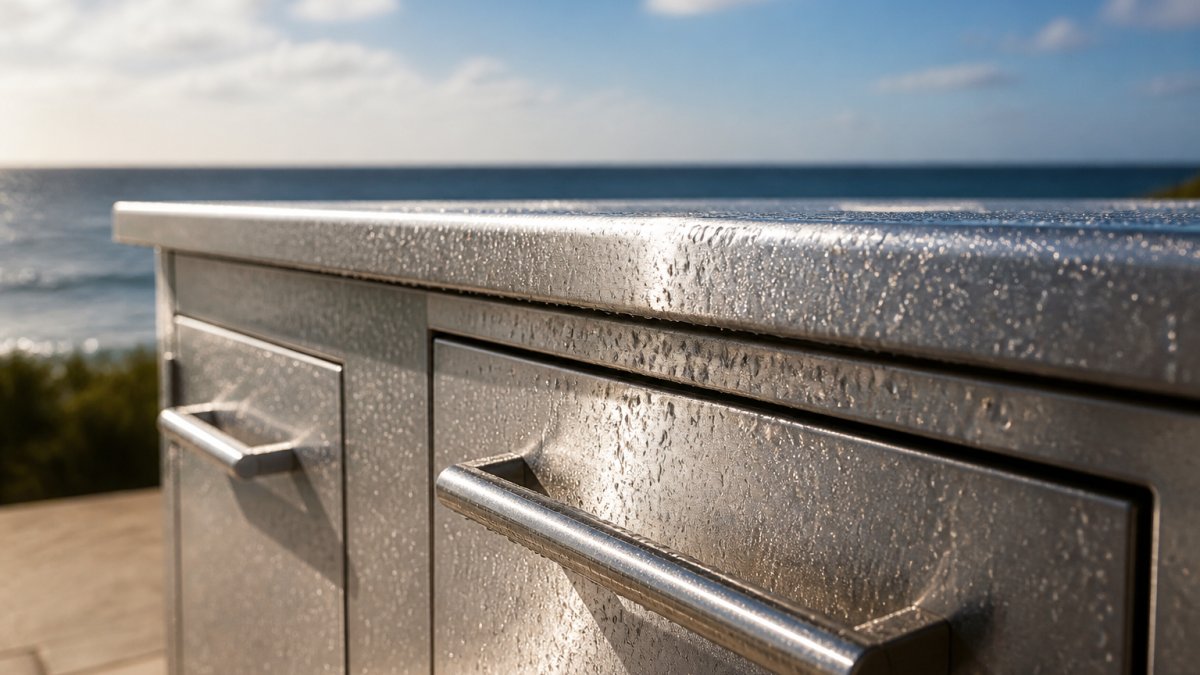
For coastal homes, 316 is the only choice that makes sense. According to ASTM International corrosion resistance standards, 316 stainless steel performs significantly better in marine environments where chloride concentrations are high. 304 stainless will corrode in salt air, usually within 2-3 years of coastal exposure if not coated or maintained obsessively. You'll see pitting, small holes that form in the surface, especially around fasteners, welds, and areas where moisture collects.
316 costs 15-25% more than 304. Within 2-3 miles of saltwater, 316 is mandatory. Beyond that distance, 304 with proper maintenance can survive, though with more risk.
Aluminum vs. Stainless Steel Outdoor Kitchen Cabinets
Aluminum is lighter and cheaper but forms porous aluminum oxide that doesn't self-repair like stainless steel's chromium layer. Once it breaks down, corrosion accelerates.

Galvanic corrosion is aluminum's serious weakness: when aluminum touches stainless steel fasteners or hinges, an electrochemical reaction eats through the aluminum. Most mixed-material designs create this problem, causing pitting and structural weakening around fasteners.
Powder-coated aluminum extends life by 5-7 years, but the coating eventually fails. Uncoated 304 stainless typically outlasts powder-coated aluminum by 3-5 years; 316 stainless by 8-10 years or more.
Aluminum costs 30-40% less but requires higher maintenance and shorter replacement cycles. For coastal homes, stainless steel's upfront premium pays for itself in longevity.
Stainless Steel Outdoor Cabinets Pros and Cons
What Works:
A 316-grade stainless steel cabinet remains structurally sound for 15-20 years with basic maintenance. The non-porous material doesn't harbor bacteria or mold, and cleaning is simple: warm soapy water and occasional vinegar rinses remove salt deposits.
Stainless steel maintains its appearance longer than aluminum or powder-coated alternatives, staying reflective and modern-looking. Resale value is also higher, as buyers recognize the durability investment.
Brushed, polished, and satin finishes all perform well in coastal environments, offering aesthetic flexibility. Stainless steel integrates seamlessly with premium materials like granite countertops and glass-door refrigerators.
What Doesn't:
A quality 316 stainless outdoor kitchen runs $4,000-$12,000. Delightful Backyard's Modular Outdoor Kitchen BBQ Island at $4,452.99 represents the mid-range, while the Blaze 108-Inch 6-Burner reaches nearly $12,000.

Stainless steel shows fingerprints and water spots constantly, requiring weekly wiping to maintain appearance. Brushed finishes hide this better than polished finishes.
Scratches are visible on stainless steel, especially on polished finishes. However, unlike painted surfaces, stainless steel scratches don't lead to corrosion.
Installation complexity is higher with stainless steel cabinets. The weight is substantial, a full outdoor kitchen can exceed 400 pounds, and assembly requires precision. Misaligned panels or loose fasteners create crevices where salt water collects, accelerating corrosion.
| Aspect | Stainless Steel (316) | Aluminum (Powder-Coated) | Polymer/Composite |
|---|---|---|---|
| Salt Air Lifespan | 15-20+ years | 7-10 years | 8-12 years |
| Maintenance Burden | Moderate (weekly wiping) | High (coating failure risk) | Low (most resistant to staining) |
| Upfront Cost | $4,000-$12,000+ | $2,500-$6,000 | $2,000-$5,000 |
| Corrosion Around Fasteners | Minimal with 316 | High (galvanic corrosion) | Minimal |
| Appearance After 5 Years | Excellent | Fair (fading/minor pitting) | Good |
| Repair/Restoration Cost | Moderate | High | High |
How to Prevent Rust on Outdoor Stainless Steel
Rust on stainless steel is technically corrosion, and it happens when the protective chromium oxide layer breaks down. The good news: prevention is straightforward if you follow a few key practices.
Weekly Maintenance: Rinse your stainless steel outdoor cabinets with fresh water after rain or salt spray exposure. Salt deposits are the enemy, so removing them regularly prevents pitting. Use a soft cloth and warm soapy water. For coastal areas, a weekly rinse is standard practice, not optional.
Monthly Deep Clean: Once a month, clean with a mixture of equal parts white vinegar and water. The acidity helps dissolve mineral deposits and salt residue that plain water misses. Wipe dry immediately afterward. This simple step extends the life of your cabinets by years.
Protect Fasteners: Stainless steel fasteners are crucial. If you have steel bolts or hinges instead of stainless steel hardware, those will corrode and create galvanic corrosion in the surrounding stainless steel. Replace any non-stainless hardware immediately. This is one of the most common mistakes homeowners make.
Avoid Abrasive Cleaners: Never use steel wool, scouring pads, or abrasive powders on stainless steel. These create tiny scratches that expose the base metal to corrosion. Use soft cloths only. For stubborn stains, use a specialized stainless steel cleaner designed for marine environments.
Blaze 108-Inch 6-Burner 85K BTU Deluxe Stainless Steel Liquid Propane Outdoor →
Apply Protective Coatings (Optional): Some homeowners apply clear lacquer or wax-based protective coatings to stainless steel cabinets in extreme coastal environments. These add an extra barrier against salt spray. However, they require reapplication annually and can trap moisture if not applied correctly. Skip this unless you're within 1 mile of the ocean.
Best Material for Outdoor Kitchen Cabinets: Cost vs. Lifespan
When comparing materials purely on cost per year of use, stainless steel becomes the better value despite higher upfront expenses. Here's the math: a $5,000 stainless steel outdoor kitchen lasting 18 years costs about $278 per year. An aluminum cabinet at $3,000 lasting 8 years costs $375 per year. Over two decades, you'd replace the aluminum twice, spending $6,000 total, while the stainless steel is still going strong.
But this assumes you maintain the stainless steel properly. Neglected stainless steel in a coastal environment will corrode faster than expected. A cabinet that receives weekly salt rinses lasts 18-20 years. One that's rinsed only a few times per year might only last 10-12 years.
Polymer and composite cabinets occupy a middle ground. They're cheaper than stainless steel and more resistant to corrosion than aluminum. However, they're also less durable overall and don't hold up well to extreme heat near grills. They're better suited for storage cabinets away from direct sun and heat, not for full outdoor kitchens in coastal areas.
For a complete outdoor kitchen setup, Delightful Backyard's modular stainless steel options offer the best balance of durability and value. The Amalfi 97-Inch 4-Burner at $10,999.97 and the Outdoor Kitchen Island 85-Inch 6-Burner at $4,330.99 both use marine-grade 304 stainless steel construction, which is acceptable for most coastal areas beyond the immediate shoreline.
The key question: how far are you from the ocean? Within 2 miles of saltwater, 316 stainless is worth the premium. Between 2-5 miles, 304 stainless with diligent maintenance works well. Beyond 5 miles, aluminum or composite cabinets become more economical.
The Real Investment: Total Cost of Ownership for Coastal Kitchens
Total cost of ownership includes the purchase price, installation, maintenance, and eventual replacement or restoration. Most homeowners focus only on the purchase price and miss the full picture.
Year 1-5: Stainless steel cabinets require minimal maintenance beyond weekly rinsing and monthly vinegar cleaning. Cost: roughly $100-$200 per year in cleaning supplies and occasional professional detailing. Installation typically runs $1,000-$2,000 for a full outdoor kitchen. Total for this period: $5,500-$7,200 for a $5,000 cabinet.
Year 6-10: Maintenance remains consistent. You might need to replace some hardware or reseal any wood components in the design. Cost: $200-$400 per year. Total for this period: $6,500-$8,200.
Year 11-15: Stainless steel cabinets are still performing well. Minor touch-ups or hardware replacement might be needed. Cost: $300-$500 per year. Total for this period: $7,000-$9,000.
Year 16-20: The cabinet is reaching the end of its life but still functional. A full restoration or replacement is approaching. Cost: $200-$300 per year for maintenance, then $5,000+ for replacement. Total for this period: $6,000-$7,000.
Total 20-Year Cost: $24,000-$31,200 for a stainless steel outdoor kitchen.
Compare this to aluminum: a $3,000 cabinet lasting 8 years costs $1,000 per year in maintenance and replacement cycle costs. Over 20 years, you're replacing it 2-3 times, bringing total cost to $25,000-$30,000, similar to stainless steel but with more downtime and hassle.
The real advantage of stainless steel isn't just durability; it's predictability. You know what you're getting. Aluminum introduces uncertainty: the coating might fail early, galvanic corrosion might accelerate, or weather damage might reduce lifespan.
Installation costs also matter. Many homeowners try DIY assembly to save money, but misaligned panels or loose fasteners create corrosion risks that cost far more to fix later.
The Bottom Line
Stainless steel outdoor cabinets are worth the investment for coastal homes, but only if you choose the right grade and commit to maintenance.
If you're within 2 miles of the ocean, 316 stainless steel is non-negotiable. Between 2-5 miles, 304 stainless steel with diligent maintenance is acceptable. Beyond 5 miles, you have more flexibility with materials, though stainless steel remains the premium choice.
At Delightful Backyard, we recommend starting with the Outdoor Kitchen Island Designed for Complete Backyard Cooking at $4,453.99, which combines 304 stainless steel construction with a modular design that simplifies installation and reduces labor costs. For maximum coastal durability, upgrade to the Blaze 108-Inch 6-Burner, which features marine-grade stainless steel and professional-grade construction.
Frequently Asked Questions
What is the best material for outdoor kitchen cabinets in coastal areas?
Stainless steel, particularly 316 grade, is the best material for coastal outdoor kitchen cabinets because it resists salt air corrosion far better than aluminum or powder-coated finishes. The chromium and molybdenum in 316 stainless create a protective oxide layer that withstands salt spray. Marine-grade 304 stainless steel is also durable but requires more frequent maintenance. Polymer and brick alternatives avoid rust entirely but lack the durability and aesthetic appeal stainless steel offers for high-end coastal kitchens.
Does salt air cause stainless steel outdoor cabinets to rust?
Salt air can cause stainless steel to rust if the grade is too low or maintenance is neglected. Standard 304 stainless steel is vulnerable to pitting corrosion in salt environments, especially within a few hundred feet of the ocean. Grade 316 stainless steel, with added molybdenum, resists salt-induced corrosion significantly better. Regular rinsing with fresh water and periodic cleaning prevent salt buildup that accelerates rust formation. Even high-grade stainless requires consistent care in harsh coastal conditions.
How do you maintain stainless steel cabinets near the coast?
Rinse stainless steel cabinets with fresh water weekly to remove salt spray and mineral deposits. Wipe dry with a soft cloth to prevent water spotting and salt accumulation. Clean with mild soap and a non-abrasive sponge monthly. For stubborn salt residue, use a stainless steel cleaner designed for marine environments. Inspect seals, hinges, and fasteners quarterly, mixed metals corrode faster than stainless alone, so replace corroded hardware promptly. Avoid abrasive scrubbers that scratch the protective oxide layer.
Is stainless steel worth the extra cost for a coastal outdoor kitchen?
Yes, stainless steel justifies the premium cost for coastal homes when you factor in lifespan and maintenance. A 316 stainless steel cabinet resists corrosion for 15-20+ years with proper care, while aluminum or powder-coated alternatives may require replacement or costly repairs within 5-10 years in salt air. Stainless steel kitchens like the Blaze 108-Inch ($11,999.97) or Amalfi 97-Inch ($10,999.97) hold their value and appearance far longer than cheaper materials, reducing total cost of ownership despite higher upfront prices.